Inside the internal turmoil between D.C. agencies, local police, and the National Security Council to clear homeless encampments || Street Sense Media + Spotlight DC
Sept. 9, 2026
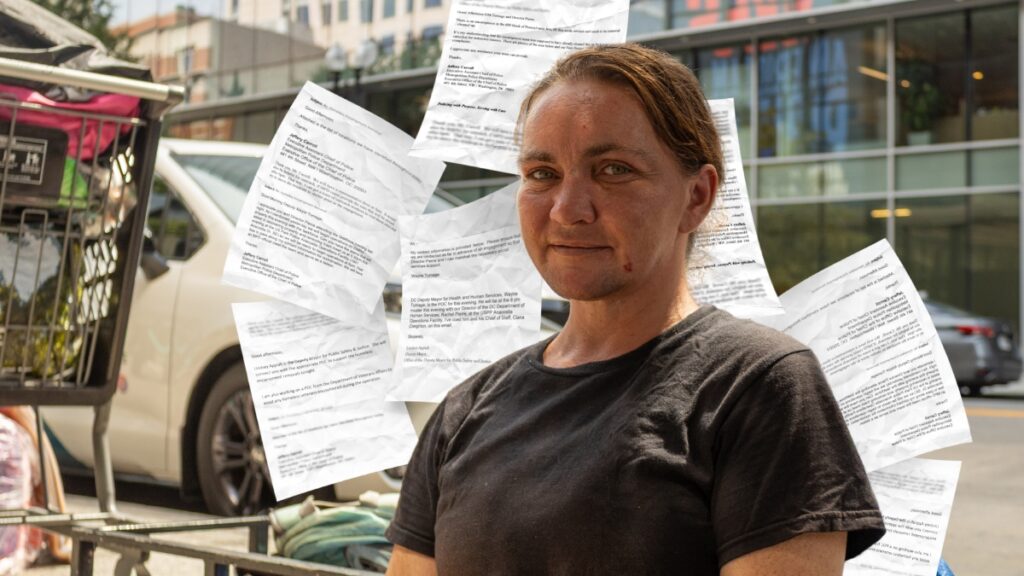
On the afternoon of Aug. 14, 2025, D.C. police walked the streets surrounding the White House looking for encampments. Officers took notes of where homeless people slept and sat, emails Street Sense obtained via public records request show. After the team of at least three walked the streets of downtown D.C., they created a list of 25 tents, tarps, and benches.
At least 14 of those sites would be removed by local police in federally-driven encampment clearings the next day, displacing over a dozen people. The week that followed — full of sweeps motivated by President Donald Trump’s hardline stance against visible homelessness — caused confusion and chaos among people experiencing homelessness in the District and changed the reality of living outside.
While it was immediately clear the closures in August of last year resulted from federal pressure, additional emails from that time obtained by Street Sense shed light on the weeks-long federal influence on D.C.’s homelessness policy, and how that week’s actions continue to echo a year after the takeover officially ended.
As jurisdictions across the country pass anti-camping legislation, the White House continues to push for “beautification” and criminalizing sleeping outside through executive orders and funding decisions. In the District, long-standing, multi-tent encampments have been eradicated as single-person encampment clearings have skyrocketed. As Deputy Mayor for Health and Human Services Wayne Turnage said during an oversight hearing earlier this year, D.C. has shifted from maintaining encampments to closing them, with the District on track to close twice as many encampments in 2026 as in 2025. The impact of the two-week crackdown on visible homelessness last summer lingers. And so do questions about what actually happened.
Read the full investigation here: https://streetsensemedia.org/article/the-turmoil-between-the-national-security-council-and-local-agencies-to-clear-homeless-encampments-during-last-years-federal-takeover/
Housing Insecurity Is Hitting D.C.’s Black, Brown, and Queer Youth Hard || City Paper + Harvard’s Economic Opportunity Lab
With no housing vouchers and nearly two months until the fiscal year resets, young people, especially in Wards 7 and 8, are struggling to stay housed while advocates figure out new ways to help.
Aug. 10, 2026
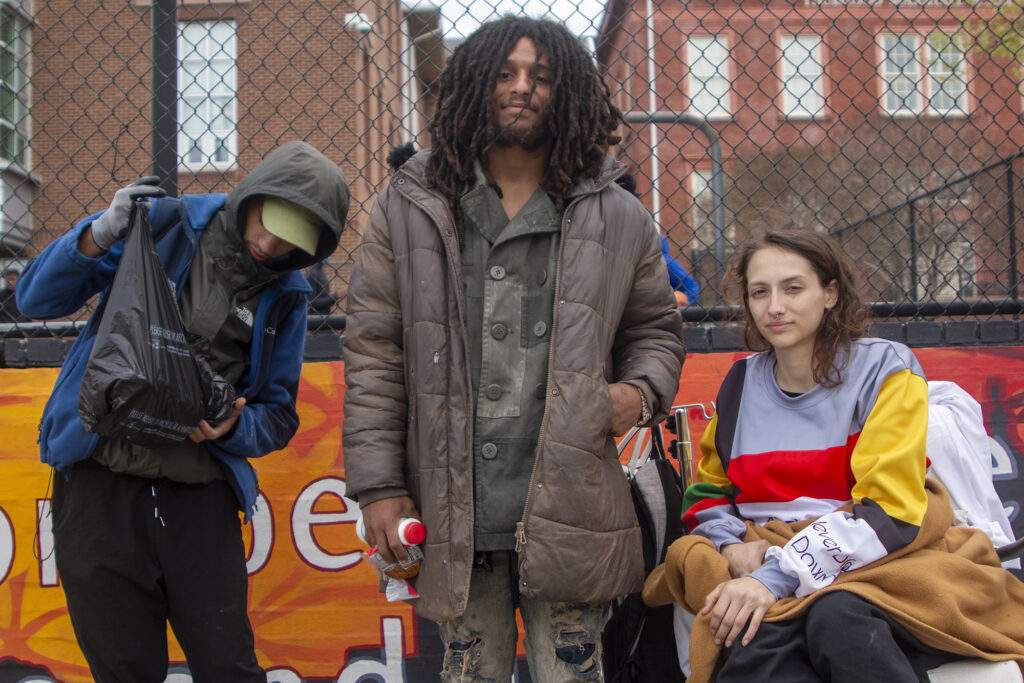
Six weeks ahead of the 2026 Youth Count DC, lack of funding for housing vouchers in D.C. is causing concern among outreach workers and advocates about young people experiencing prolonged periods of homelessness and housing insecurity. In the city, this reality disproportionately affects Black youth in Wards 7 and 8, many of whom must commute across the river to access targeted services.
Federally and locally funded vouchers provide stability via subsidized housing and are often one of the most crucial steps in ending chronic homelessness. But, as of May, there is no money left in the city’s budget to fund new vouchers until the fiscal year resets in October. For FY27, the budget supports 469 existing housing vouchers as well as additional funding for 190 vouchers for families exiting Rapid Rehousing.
The U.S. Department of Housing and Urban Development defines “youth” in terms of homelessness as people between the ages of 18 and 24. D.C.’s yearly Youth Count happens every September and is put on by the Community Partnership on behalf of the D.C. Department of Human Services. This survey works to understand how D.C.’s young people are experiencing housing insecurity, including identifying trends that disproportionately impact this age group—such as couch surfing—compared to older demographics. (The count defines housing insecurity as nonpermanent housing situations, whether that’s going from place to place or being at risk of eviction, versus being unhoused or staying in an emergency shelter or transitional housing program.)
According to the 2023 Research Report by the Urban Institute, 12 percent of all D.C. residents experience housing insecurity—equaling an estimated 82,452 people. “Transitional aged youth” (survey participants ages 18 to 24) account for an estimated 12 percent of this population, and the vast majority identify as Black: making up 90 percent of single youth and 93 percent of youth who are pregnant and/or parents. (“Inadequate housing” was cited as the most common reason for insecurity.) The percentage of Black youth experiencing housing instability in D.C. is noticeably higher than the 68 percent of all housing insecure residents who identify as Black, non-Hispanic. Notably too, Black-identifying residents only make up 41 percent of D.C.’s overall population.
Read the full investigation here: https://washingtoncitypaper.com/article/789699/housing-insecurity-is-hitting-d-c-s-black-brown-and-queer-youth-hard/
Homeless Encampment Clearings Increase Across D.C. Without Steady Roads to Housing || City Paper + Harvard’s Economic Opportunity Lab
Funding for housing vouchers is depleted and encampment clearings are increasing. So where are people experiencing homelessness supposed to go?
May 11, 2026
As summer approaches, city officials are faced with a familiar question: Where are people experiencing homelessness supposed to go?
The answer this year could be more complicated than most because while the District is cracking down on encampments, it has also run out of housing vouchers. D.C. Housing Authority Interim Executive Director Nicole Wickliffe confirmed during a recent oversight hearing that the District is out of money to fund new housing vouchers and is unable to award new ones until next fiscal year.
Spokespeople for D.C.’s Department of Human Services and the Office of the Deputy Mayor of Health and Human Services did not respond to questions about the dual problems heading into summer, but both offices confirmed the shortage of vouchers in fiscal year 2026, which ends in September. DHS Director of Communications Kevin Carpenter says the agency anticipates 104 new site-based subsidies (where the voucher is attached to the unit rather than the tenant) in fiscal year 2027; more than 9,000 households with locally and federally funded vouchers are currently active in DHS programs, he says.
One of the only consistent routes out of homelessness is through locally and federally funded housing voucher programs such as Permanent Supportive Housing vouchers and the Local Rent Supplement Program. Homeless residents have waited for years for these subsidies, and that wait is going to continue to increase.
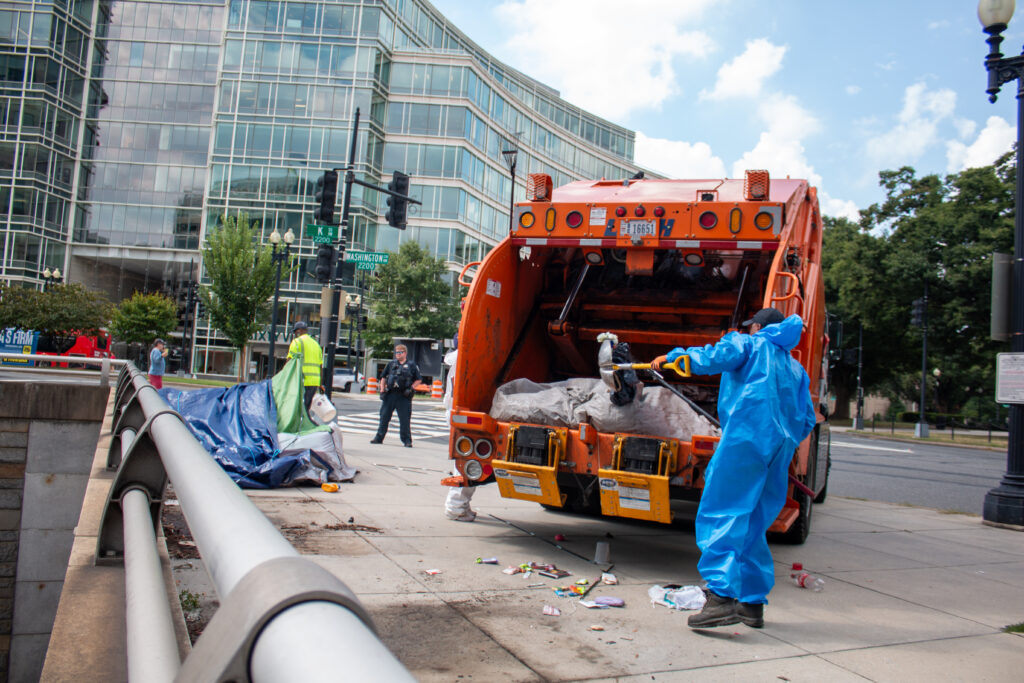
Meanwhile, outreach workers and legal advocates are concerned about the impacts of a lack of housing for residents as the Bowser administration has drastically increased encampment clearings—they’re on track to spike by more than 200 percent in 2026 compared to 2024.
Now that the weather is warming up and emergency shelter beds are closed, advocates worry that the amount of beds in year-round, low-barrier shelters are not sufficient to meet the need. Getting a spot in a low-barrier shelter is “not a slam dunk,” says Andy Wassenich, director of policy for Miriam’s Kitchen.
“There are really no ways out of homelessness right now,” Wassenich says. “There are no vouchers, there are no interventions, so people who are, you know, new to homelessness or newly becoming homeless … they’re going to end up being homeless for a while.”
Read the full investigation here: https://washingtoncitypaper.com/article/785672/homeless-encampment-clearings-increase-across-d-c-without-steady-roads-to-housing/